I'm talking about heat sensitivity and how it affects MS, not me in a bikini–I'm about 30 years past that expiration date.
Read my latest article on the subject over at www.Healthline.com. To get my own personal view on the matter, keep reading here first...
It was early on in my MS career (because that's how I think of it now, due to the opportunities which have come my way since diagnosis) that I had my battle with summer.
Summer won. That was the year the family drove from Florida to Georgia to see relatives who lived in the middle of Death Valley. Yeah, I know my geography is all wrong, but you could never have convinced me of that.
We were outside in the middle of July with not a single tree in sight. Sitting by a pool and broiling in sunshine. The mercury was pegging 100 degrees. Not knowing there would be swimming involved, I wasn't dressed for the occasion. I was wearing jeans and a T-shirt and sitting at the little round glass table with everyone else. I don't even recall an umbrella. I just remember the unbearable heat.
It grew hotter and hotter, but I never broke a sweat. That reminds me of the back-handed compliment/joke my dad used to tell, "You don't sweat much for a fat girl." Had I been able to sweat, I may have cooled off, but instead the heat just drove my core temperature through the roof.
I got up and staggered to the car, parked about twenty feet away and crawled inside to start up the A/C. Even with it blasting in my face, it seemed I couldn't cool down. By this time both legs were numb and weak. I was experiencing a fatigue like none before. I felt like I weighed a thousand pounds and it took everything I had to even lift my head off the back of the seat to turn and call out the window for someone to help.
That was my first–and most dramatic–encounter with heat sensitivity. After that weekend, when we returned to Florida, I ended up being admitted to the hospital for three days of IV Solumedrol to halt a new MS attack. My neuro at the time claimed it was only coincidental that I had such an intense reaction to the heat and then had a relapse. I've always wondered if maybe it wasn't the reason.
So this week's article about heat sensitivity is something I know most of us with MS are familiar with. If you have MS and don't have an issue with the heat, I'm assuming you are reading this at either the north or south pole, in which case cold is probably more of an issue.
If you are anywhere in between, be sure to read along for some great pointers and links to tools that could make summertime more bearable for you.
Because they don't have room for all the wonderful content I would love to share with you over at Healthline.com, I am going to continue blogging my "leftovers" so you can get a veritable smorgasbord of useful info.
This Week's Leftovers (in no particular order)...
In an interview with Anne P., who is from Georgia and has had MS for 14 years now, we learn about her own experience with the heat. She also has quite a few good tips on how to deal with it.
"[I use a] cooling towel. I love the Frogg Toggs towels and neck wraps - they are amazing. Other than that I always have ice water at the ready and do my level best not to be farther than a comfortable walk to an air conditioned space - even if it's my car!," Anne advises, "Don't push it. Stop, rest and cool down a lot, even if you think you don't need to. It is better to be safe than sorry!"
When asked how heat sensitivity has made a difference in her life, Anne says "My days of pool parties and outdoor festivals are over. Really, what I miss the absolute most is being able to volunteer at booths for a local charity that I love."
Thanks, Anne!
Corrina Steiger, President of the North Florida Chapter of the NMSS provided a lot of valuable tips on dealing with the heat. She also mentioned that the NMSS has resources to help people in need of assistance obtaining cooling vests or paying high cooling bills. "For more information on how we can help, contact the Society in your area by calling 800-344-4867.”
Thanks, Corrina!
The interview I had with Dr. Scott Silliman was conducted over the phone and I did my best to type and listen and comprehend all at once, but I probably failed him miserably. He had so much great info to share.
"I usually see [heat sensitivity] most in people with spinal cord MS and in those with optic neuritis. I see it less in patients with a cerebral form of MS." Silliman said, "This is because there is less redundancy of nerve pathways in the spinal cord and also in the optic nerve, so there is less ability to compensate for nerves that aren’t working.”
It was an honor to have the pleasure of interviewing Dr. Silliman, as he is my own personal neurologist and was the lead investigator of the TRANSFORMS trial in which I participated.
Thanks, Dr. Silliman!
Kim Gillespie, creator of the TaTa Coolerz, has a different approach with how to combat the heat, for women anyway. She was away on a camping trip over Memorial Day Weekend (happy anniversary, Kim) when she got the idea for a cooling device that could be discreetly worn to cool you off without everyone aware you are suffering. The TaTa Coolerz are worn tucked inside a woman's bra, providing cool comfort to a sensitive area while bringing down your core temperature.
"They go right in the freezer, then you take them out and squish them up to get them malleable. Then, when you tuck them in your bra, they conform to your shape. We've had them last as long as two hours, fifteen minutes in the Florida sun."
"They are designed after high-end fashion push-up bras, and they are durable and reusable," said Gillespie. From her facebook page, "For the entire month of May TaTa Coolerz is honoring Mom. Please use code: Mom2013 to receive a 20% discount on your purchase."
Thanks Kim, for giving us another alternative to fighting this intolerable heat!
Summer doesn't have to be dreaded and unbearable. We can once again venture back out into nature to take part in fun activities like pool parties or picnics as long as we approach it with common sense and a few tools.
That's it for this week.
If I don't see you before, I'll see you next week. Until then, try to stay cool.

My story of being a hypochondriac, an MS patient, and a guinea pig. NOTE: After 16 years on Fingolimod, I'm starting my self-designed study to taper off the drug while avoiding the now well-documented "rebound relapse" phenomenon. I'll be writing about my journey on SubStack and you can find it here: https://farewellfingolimod.substack.com/
Wednesday, May 22, 2013

Wednesday, May 15, 2013
Deciphering the Smoke Signals: New Study Reveals Cigarette Smoking May Speed MS Progression
My second article is hot off the virtual press!
http://www.healthline.com/health-news/ms-cigarette-smoking-may-speed-progression-of-multiple-sclerosis-051513
In it I tackle smoking and recent study results regarding its effect on a person with multiple sclerosis. We've all known for a very long time that smoking is bad for us. I know first hand. I was a pack-a-day smoker for over 30 years. I only quit because I was terrified it would complicate things when I joined the TRANSFORMS trial back in 2007. The idea of "what if" plagued me and I figured I had the best shot at minimizing a negative outcome if I quit doing the one thing that was within my own control.
So on July 4th, 2007, I awoke for the first day in as long as I could remember and didn't start the day with the familiar comfort of a lung full of smoke. Instead, I pushed my way past the haze and the hurdles, the brain fog and the biting cravings, and made it through one day without succumbing to temptation.
It was no coincidence that I quit on the 4th of July. No, I wanted the country to celebrate my anniversary of quitting each year with a sky full of fireworks. No matter that they don't know me, nor would they even care. In my own mind, it's enough to believe it's a celebration of a turning point in my life.
Quitting smoking and joining the trial were the two best–and most health-transforming–things I have done in my life. Of course I tell my children that an even greater feat than quitting smoking would be to never have taken up the habit in the first place. But I'll take what I can get and hope the youngest keeps a level head and avoids curiosity, peer pressure, and the idiotic notion that "I can try it and not get hooked."
I noticed that I felt better. It wasn't right away, but over time. The hacking morning cough stopped. I could take a deep breath. I could smell even the most delicate of scents again. My taste buds exploded with excitement. It was especially nice to have my hair and clothing stay clean smelling.
During the TRANSFORMS study we had pulmonary function tests (PFT) to test our lung function since earlier studies of Fingolimod demonstrated a possibility of developing a slight asthma-like condition. I was both happy and relieved when I learned my lung function was normal. I felt like I had dodged a bullet. I was so glad I quit when I did.
I didn't use any smoking cessation techniques or tools unless you count those individually wrapped Dove Promises dark chocolate bars. I worked my way up to a pack a day of those bad boys. Between that and the sheer terror I felt going into the trial, they were enough to remind me of my goal of controlling my MS. To me, that was worth pushing through the cravings as they came at me. Taking them on one at a time and dealing with only the moment I was immediately facing.
It was the hardest thing I have ever done. I am proud to say I have never put even one single cigarette to my lips again (my secret tip for remaining a non-smoker).
I'm not writing this to be preachy. I'm not better than you because I don't smoke. I used to be a smoker and when you smoke, the most annoying person in the room is the recovered smoker. They want to foist their opinions and best intentions on you, figuring you never got the memo that it's bad for you, regardless of the Surgeon General's love note on the side of every pack. You'll quit when/if you are damn good and ready. I know that because I thought that.
All I am doing here is presenting some really interesting info in this article (which I'm sure you're going to rush right over and read, am I right?) about how MS is affected when you smoke.
Knowledge is power. I'm hoping anyone who has MS, smokes, and is miserable with lots of disease activity might consider the facts and conduct their own experiment. If you quit and start feeling better, let me know. I'd love to do a follow-up post.
Thanks for reading. By the way, my great readers boosted the Facebook "recommends" of my first article to nearly 400. I'm just fascinated by that and deeply appreciative.
So let's do it again! :)
http://www.healthline.com/health-news/ms-cigarette-smoking-may-speed-progression-of-multiple-sclerosis-051513
http://www.healthline.com/health-news/ms-cigarette-smoking-may-speed-progression-of-multiple-sclerosis-051513
In it I tackle smoking and recent study results regarding its effect on a person with multiple sclerosis. We've all known for a very long time that smoking is bad for us. I know first hand. I was a pack-a-day smoker for over 30 years. I only quit because I was terrified it would complicate things when I joined the TRANSFORMS trial back in 2007. The idea of "what if" plagued me and I figured I had the best shot at minimizing a negative outcome if I quit doing the one thing that was within my own control.
So on July 4th, 2007, I awoke for the first day in as long as I could remember and didn't start the day with the familiar comfort of a lung full of smoke. Instead, I pushed my way past the haze and the hurdles, the brain fog and the biting cravings, and made it through one day without succumbing to temptation.
It was no coincidence that I quit on the 4th of July. No, I wanted the country to celebrate my anniversary of quitting each year with a sky full of fireworks. No matter that they don't know me, nor would they even care. In my own mind, it's enough to believe it's a celebration of a turning point in my life.
Quitting smoking and joining the trial were the two best–and most health-transforming–things I have done in my life. Of course I tell my children that an even greater feat than quitting smoking would be to never have taken up the habit in the first place. But I'll take what I can get and hope the youngest keeps a level head and avoids curiosity, peer pressure, and the idiotic notion that "I can try it and not get hooked."
I noticed that I felt better. It wasn't right away, but over time. The hacking morning cough stopped. I could take a deep breath. I could smell even the most delicate of scents again. My taste buds exploded with excitement. It was especially nice to have my hair and clothing stay clean smelling.
During the TRANSFORMS study we had pulmonary function tests (PFT) to test our lung function since earlier studies of Fingolimod demonstrated a possibility of developing a slight asthma-like condition. I was both happy and relieved when I learned my lung function was normal. I felt like I had dodged a bullet. I was so glad I quit when I did.
I didn't use any smoking cessation techniques or tools unless you count those individually wrapped Dove Promises dark chocolate bars. I worked my way up to a pack a day of those bad boys. Between that and the sheer terror I felt going into the trial, they were enough to remind me of my goal of controlling my MS. To me, that was worth pushing through the cravings as they came at me. Taking them on one at a time and dealing with only the moment I was immediately facing.
It was the hardest thing I have ever done. I am proud to say I have never put even one single cigarette to my lips again (my secret tip for remaining a non-smoker).
I'm not writing this to be preachy. I'm not better than you because I don't smoke. I used to be a smoker and when you smoke, the most annoying person in the room is the recovered smoker. They want to foist their opinions and best intentions on you, figuring you never got the memo that it's bad for you, regardless of the Surgeon General's love note on the side of every pack. You'll quit when/if you are damn good and ready. I know that because I thought that.
All I am doing here is presenting some really interesting info in this article (which I'm sure you're going to rush right over and read, am I right?) about how MS is affected when you smoke.
Knowledge is power. I'm hoping anyone who has MS, smokes, and is miserable with lots of disease activity might consider the facts and conduct their own experiment. If you quit and start feeling better, let me know. I'd love to do a follow-up post.
Thanks for reading. By the way, my great readers boosted the Facebook "recommends" of my first article to nearly 400. I'm just fascinated by that and deeply appreciative.
So let's do it again! :)
http://www.healthline.com/health-news/ms-cigarette-smoking-may-speed-progression-of-multiple-sclerosis-051513
Sunday, May 12, 2013
MS and Memory Loss: There's an App for That!
Last month a friend of mine sent me a link to a posting on Facebook. She knows I enjoy blogging and this post was a call for freelance writers to apply for a job with Healthline.com contributing to their all-new MS News Beat section.
I was under contract with Novartis at the time, as a Gilenya Guide for their Gilenya Go Program, representing them as a spokesperson. I emailed them to ask if this writing opportunity would conflict with the speaking job. In the corporate world, decisions like this move at a break-neck speed reminiscent of continental drift. Reminds me of the snail that got mugged by a turtle. When the cops got there and questioned the snail about the chain of events, his response was, "I don't know. It all happened so fast!"
In the meantime, there was a deadline for the job application, so I proceeded with that before I had my answer from Legal.
Who would have ever expected me to actually land the job? Certainly not I. I excitedly took the offer before Legal at Novartis ever had an answer. The awkward moment came when the powers that be handed down their decision. There was concern that, with my name on the byline writing about the subject of MS, maybe my views might be misconstrued as their views.
I can fully appreciate that and respect their objective to always be transparent. I felt bad for the person who had to break the news to me, but (as is always the case with the Guide Network that handles the Gilenya Guides) she was eloquent, compassionate, and very professional. I love them all over there and while this bridge to patient speaking is ablaze and burning behind me, there may be collaborations on other projects in the future. We parted ways with a virtual hug.
That's not to say that I didn't try running the idea of using a pen name by them, but only halfheartedly as I already knew the answer to that. Like my mother always says, "It doesn't hurt to ask".
 Moving forward, decision made, I ventured into this all new world of writing something both meaningful and relevant about multiple sclerosis.
My very first article sprung from one of the "pitches" I was asked to do during the interview process.
Turns out writing news is... different. It cannot be accomplished in one pass as my lazy style of free-form blogging often (okay, always) appears. There are people who have to read, critique, and edit what I produce. That task goes to Heather, who has taken me under her wing teaching me all the stuff I always wanted to know about professional writing, but was too afraid to ask. The idea has occurred to me that I should see if she's game to take on the pastime hobby of doing the same to my blog.
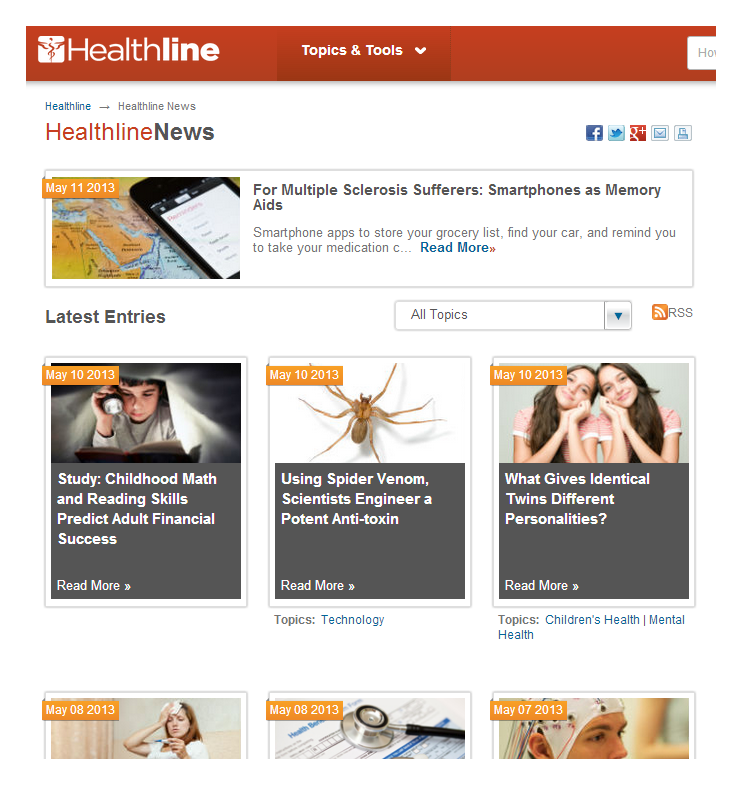
My debut article is now in a glass case, behind velvet ropes, guarded 24/7 by armed guards in its published position over at www.healthline.com.

Use your cellphone’s camera to photograph things you want to remember. For example, take a photo of your medicine bottle to have the label handy.
Use your smartphone’s “Contacts” list for more than storing just phone numbers. Contacts can accommodate email addresses, notes, mailing addresses, websites and more.
Beyond the basics
What if the alarm, camera and contacts aren't enough to handle all the memory boosting you need? Check out these apps, organized by memory goal, which are all free unless a price is indicated.
Evernote, a robust note organizing app that can even search text in images. If you want a quick reminder, but don’t want to take all those sticky notes with you, photograph them.
Tape-a-Talk Voice Recorder quickly records memos to yourself without typing.
Pageonce - Money & Bills money tracking / bill due reminder.
Car Maintenance Reminder Lite car maintenance reminder.
MyCar Locator Free - Press the “park” button in the parking lot before you walk away from your car, and a moving pointer will lead you back to car.
Where's My Droid Phone Locator - makes a shrill ring and activates the camera flash to help you find it.
Maps - Google - type or say your destination and Maps will give you directions - either on a map or turn by turn directions. Both with or without voice guidance.
Google Calendar - appointment reminders by email, popup (for your PC) and text message.
Pinterest - Not just for pinning those crafts! Use pinterest as a visual bookmark organizer for important things you’ve found online. Researching MS symptoms? If there’s a photo on the page, it’s “pin-able”.
Pocket (formerly Read It Later) is a bookmarking add-on for your web browser that lets you organize things you want to save for later.
Free Alarm Clock - Desktop alarm clock with customizable settings.
I was under contract with Novartis at the time, as a Gilenya Guide for their Gilenya Go Program, representing them as a spokesperson. I emailed them to ask if this writing opportunity would conflict with the speaking job. In the corporate world, decisions like this move at a break-neck speed reminiscent of continental drift. Reminds me of the snail that got mugged by a turtle. When the cops got there and questioned the snail about the chain of events, his response was, "I don't know. It all happened so fast!"
In the meantime, there was a deadline for the job application, so I proceeded with that before I had my answer from Legal.
Who would have ever expected me to actually land the job? Certainly not I. I excitedly took the offer before Legal at Novartis ever had an answer. The awkward moment came when the powers that be handed down their decision. There was concern that, with my name on the byline writing about the subject of MS, maybe my views might be misconstrued as their views.
I can fully appreciate that and respect their objective to always be transparent. I felt bad for the person who had to break the news to me, but (as is always the case with the Guide Network that handles the Gilenya Guides) she was eloquent, compassionate, and very professional. I love them all over there and while this bridge to patient speaking is ablaze and burning behind me, there may be collaborations on other projects in the future. We parted ways with a virtual hug.
That's not to say that I didn't try running the idea of using a pen name by them, but only halfheartedly as I already knew the answer to that. Like my mother always says, "It doesn't hurt to ask".
 Moving forward, decision made, I ventured into this all new world of writing something both meaningful and relevant about multiple sclerosis.
My very first article sprung from one of the "pitches" I was asked to do during the interview process.
Turns out writing news is... different. It cannot be accomplished in one pass as my lazy style of free-form blogging often (okay, always) appears. There are people who have to read, critique, and edit what I produce. That task goes to Heather, who has taken me under her wing teaching me all the stuff I always wanted to know about professional writing, but was too afraid to ask. The idea has occurred to me that I should see if she's game to take on the pastime hobby of doing the same to my blog.
My debut article is now in a glass case, behind velvet ropes, guarded 24/7 by armed guards in its published position over at www.healthline.com.
For Multiple Sclerosis Sufferers: Smartphones as Memory Aids

My first draft, while well written, was also done in a style more befitting a "Lifestyles" column, so out came the red pen and Heather went to work helping me craft it into a News Story. The very first thing she did was strike the entire center section of the article where I had originally compiled a list of useful apps to be used as memory tools. Since this was never published, it is mine to do with as I like.
I'm not one to see perfectly good words go to waste, so I'm presenting the list below in order that someone reading along might find the apps I've linked to useful.
I'm not one to see perfectly good words go to waste, so I'm presenting the list below in order that someone reading along might find the apps I've linked to useful.
Article Scraps & Leftovers...
Right out of the package, your phone is equipped with basic functions which can be used as memory tools. Did you know most cell phones have an alarm? Check your clock settings for an option to set an alarm for those short-term tasks, like remembering to leave home for an appointment.Use your cellphone’s camera to photograph things you want to remember. For example, take a photo of your medicine bottle to have the label handy.
Use your smartphone’s “Contacts” list for more than storing just phone numbers. Contacts can accommodate email addresses, notes, mailing addresses, websites and more.
Beyond the basics
What if the alarm, camera and contacts aren't enough to handle all the memory boosting you need? Check out these apps, organized by memory goal, which are all free unless a price is indicated.
The examples below come from Google Play, but thousands more can also be found on iTunes, or the Amazon Appstore.
What was I thinking? Apps to organize your thoughts and plans.
Out of Milk Shopping List, a shopping, pantry and to-do list manager that also shows local grocery store coupons.Evernote, a robust note organizing app that can even search text in images. If you want a quick reminder, but don’t want to take all those sticky notes with you, photograph them.
Tape-a-Talk Voice Recorder quickly records memos to yourself without typing.
What was I going to do? Apps to remind you of your routines.
Med Minder - Pill Reminder ($1.99)Pageonce - Money & Bills money tracking / bill due reminder.
Car Maintenance Reminder Lite car maintenance reminder.
Where did I put that? Apps to help you find things.
We all lose our keys from time to time, but why search for things your phone will find for you?MyCar Locator Free - Press the “park” button in the parking lot before you walk away from your car, and a moving pointer will lead you back to car.
Where's My Droid Phone Locator - makes a shrill ring and activates the camera flash to help you find it.
Maps - Google - type or say your destination and Maps will give you directions - either on a map or turn by turn directions. Both with or without voice guidance.
Desktop Memory Tools
For those who don’t have a smartphone but do have a computer, try using these tools as memory aids.Google Calendar - appointment reminders by email, popup (for your PC) and text message.
Pinterest - Not just for pinning those crafts! Use pinterest as a visual bookmark organizer for important things you’ve found online. Researching MS symptoms? If there’s a photo on the page, it’s “pin-able”.
Pocket (formerly Read It Later) is a bookmarking add-on for your web browser that lets you organize things you want to save for later.
Free Alarm Clock - Desktop alarm clock with customizable settings.
Special Thanks
I would be remiss if I failed to give thanks where due. In the process of compiling my resume, (something I have not done in a very long time as I have been self-employed for all but the first few years of my adult life) I called on some of the big-hitters I've met during the past two years. They all foolishly agreed to risk their own professional careers by vouching for me if need be. I have no idea if Healthline actually reached out to them.
Craig Lipset
Craig Lipset
Head of Clinical Innovation
Worldwide Research & Development, Pfizer
Gerald Matczak
Community Manager, Lilly Clinical Open Innovation
Eli Lilly and Company
Jill Ozovek
Senior Program Director, ExLPharma
All of these people are amazing examples of humanity and I am honored to have crossed paths with each of them.
So, that's that. My life starts a new chapter. Had I invested as much time and effort into my next assignment as I have in creating this blog post, I'd be done already. Instead, I'll end this here so I can spend at least part of my Mother's Day researching the topic of my next piece...
So, that's that. My life starts a new chapter. Had I invested as much time and effort into my next assignment as I have in creating this blog post, I'd be done already. Instead, I'll end this here so I can spend at least part of my Mother's Day researching the topic of my next piece...
The Effects of Smoking on Disease Progression in Multiple Sclerosis
(or at least that's the working title for now.)
Please be sure to "Recommend" the article on Healthline.com when you have read it. I need all the link love I can get.
Please be sure to "Recommend" the article on Healthline.com when you have read it. I need all the link love I can get.
Subscribe to:
Posts (Atom)